Getting a claim denial notice is unsettling — it feels like a bill is about to land on you. But most denials aren't final, and a lot of them aren't even your job to fix. Before you call your insurance company or pay anything, spend a few minutes figuring out what kind of denial you're actually looking at.
Here's how to triage it.
Start With Your EOB, Not the Bill
The denial will show up on your explanation of benefits (EOB) — the statement your insurance company sends after they process a claim. Your EOB is the source of truth for what's going on, not any bill you might get in the mail.
Always check to see if your claim is still processing or if it's finalized before taking any action.
Pull it up (by mail, email, or your insurance portal) and look for three things:
The status — is the claim still processing, or is the denial finalized?
The denial reason — why was it denied?
The insurance plan listed — is it your current plan?
These three data points tell you whether you need to do anything at all.
Step 1: Is the Denial Actually Final?
Claim denials aren't always final decisions. Your EOB will usually tell you whether the claim is still being processed or has been finalized.
If it's still processing, your provider and insurer may still be sorting things out. It's worth waiting before you do anything.
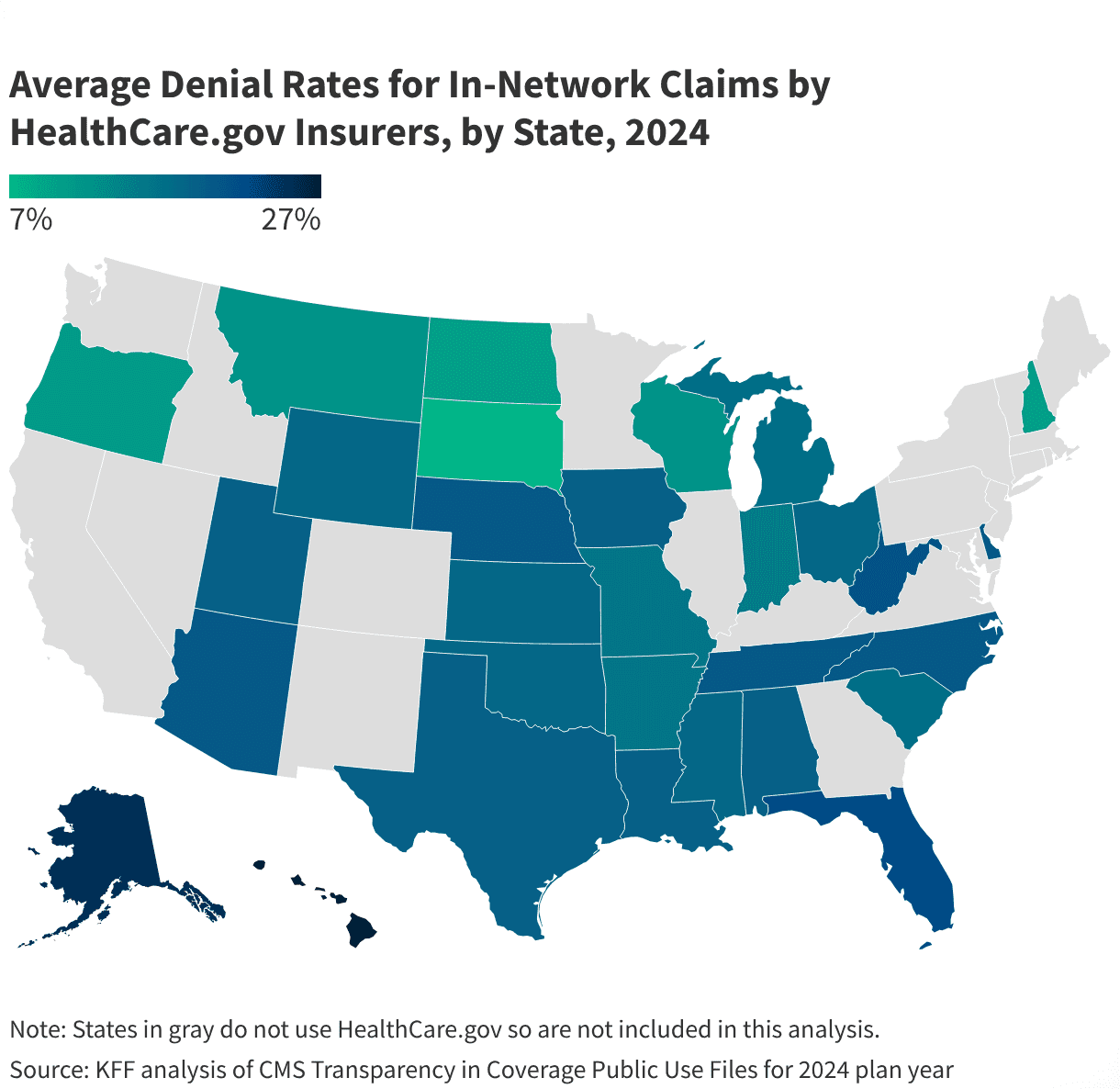
If it's finalized, that's when you start looking at the reason and figuring out next steps — which often means an appeal. KFF has a good overview of how common denials are in marketplace plans — insurers denied 19% of in-network claims in 2024, with rates ranging from 3% to 36% by insurer — and what appeal outcomes typically look like if you want more context.
Step 2: Figure Out Who's Supposed to Fix It
This is the part most people get wrong. Not every denial is yours to resolve — and in a lot of cases, an in-network provider is contractually the one who has to handle it.
Some denials are going to be the responsibility of your provider or your insurer to fix themselves. It's more of an FYI — we're figuring this out.
Denial reason | Who fixes it | What you do |
|---|---|---|
Missing prior authorization | Provider (if in-network) | Call your doctor's office to confirm they're handling it |
Coding or billing error | Provider's billing office | Call to confirm they'll resubmit with the correction |
"Not medically necessary" | You and your doctor together | Work with your doctor to gather clinical notes for an appeal |
Wrong insurance plan on file | You | Call your provider with your current insurance info |
Coverage lapse or eligibility issue | You | Confirm your active coverage with your insurer |
On that wrong-insurance-plan one: it's really common, and it's easy to miss.
If you get a claim denied because it says your insurance doesn't cover you anymore, you're going to want to check to see which insurance plan the claim was submitted to. If you've recently switched jobs or if you haven't been to this doctor in a long time since you've switched insurance plans, call the provider back and ask them to resubmit to the right plan.
If you're seeing an in-network provider and the denial falls into one of the top two rows, it's genuinely their problem to solve — but don't assume it happens automatically. Call the billing office and confirm they've seen the denial and are resubmitting. Things slip through, and a two-minute phone call saves you weeks of confusion.
For the bottom three rows, you're the one who needs to act.
Step 3: If It's on You to fix, Start With Your Provider
For most denials, your first call should still be to your provider's billing office — not your insurance company.
Call your provider's billing office if:
The denial is about authorization, coding, or billing
You think the claim went to an old or wrong insurance plan
You got the denial but haven't gotten a bill
Call your insurance company if:
The denial is about your eligibility or active coverage
You need a plain-English explanation of what your plan actually covers
Your provider has confirmed they submitted everything correctly and it still got denied
What Not to Do
A few things to hold off on in the first 48 hours:
Don't pay the bill yet if a bill arrives before your EOB is fully resolved. Providers sometimes bill before insurance finishes processing, and the number you're being asked to pay might not be the final number.
Don't file an appeal yet unless you've confirmed with your provider that they can't resolve it through resubmission or a correction. Appeals take time and energy — save them for when they're actually needed.
When You Need More Support
If your provider can't resolve the denial, or you're staring down a complicated appeal, you don't have to navigate it alone. Granted reviews denied claims, identifies the strongest grounds for appeal, and handles the back-and-forth with your insurer. You only pay if we save you money.
TL;DR
Check your EOB first, not the bill
Look at the status, denial reason, and plan listed
Many denials are the provider's job to fix, especially for in-network care — but confirm with a phone call
Call your provider's billing office before calling your insurance company
Don't pay the bill or file an appeal until you understand which bucket the denial falls into
Frequently Asked Questions
How do I know if my claim denial is final or still being processed?
Check your EOB — it'll typically say "still processing," "finalized," or something similar. You'll see this whether you get your EOB by mail, email, or through your insurance portal.
Should I call my provider or insurance company first when I get a denial?
Start with your provider's billing office, especially if the denial involves authorization or billing. They handle most of these issues and can tell you if they're already resubmitting.
What if the claim went to my old insurance plan?
Call your provider's billing office and give them your current insurance info so they can resubmit. This one shows up a lot after job changes or if you haven't seen the provider in a while.
How long should I wait before taking action on a denial?
If the EOB says "still processing," give it a couple of weeks. If it's finalized, don't wait — call your provider's billing office to find out what's going on and whether they're handling it.